




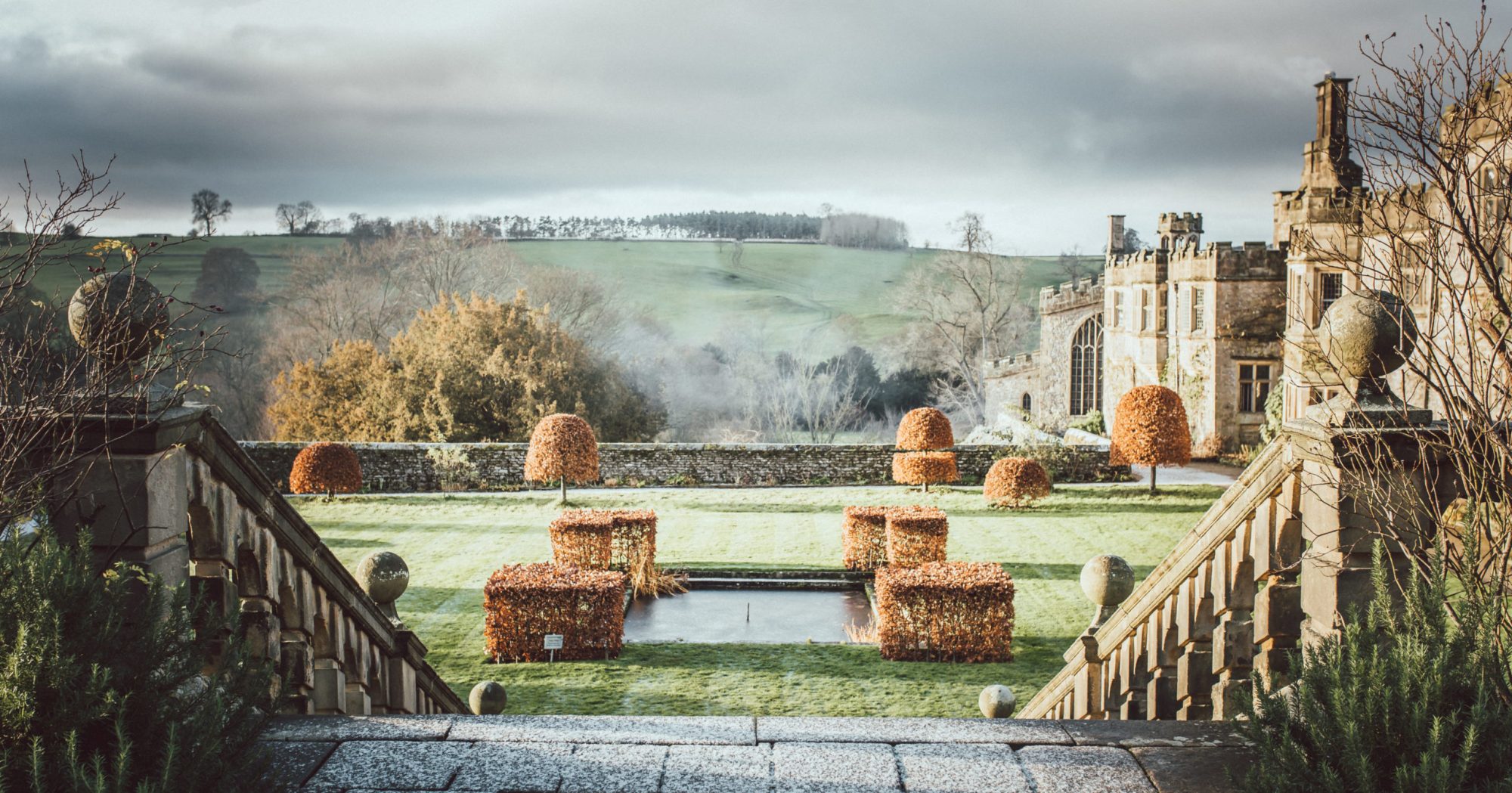
Haddon Hall is one of Derbyshire’s most distinctive historic houses, standing above the River Wye between Bakewell and Rowsley in the Peak District. Rather than the highly remodelled interiors found in many country houses, Haddon preserves an unusually complete sequence of medieval, Tudor and early Elizabethan rooms, alongside terraced gardens descending towards the river.
This guide covers everything you need to plan a visit to Haddon Hall in 2026, including current ticket prices, opening times, parking, public transport, accessibility, food and drink, visiting with children and the main rooms and gardens to look out for. It also explains how much time to allow and what can realistically be combined with Haddon on the same day.
Visitor information was checked against Haddon Hall’s official website on 30 August 2026. Opening arrangements, events and prices can change, so check the official website again before travelling.
Haddon Hall quick overview
Haddon Hall is a privately owned fortified manor house near Bakewell in Derbyshire.
Its history stretches back around 900 years, but what makes Haddon particularly interesting is how much early architecture survived later fashions for rebuilding country houses. The property remained largely unused for roughly two centuries before restoration began in the early 20th century, helping preserve rooms and architectural features from the medieval, Tudor and Elizabethan periods.
Inside, highlights include the medieval Banqueting Hall, Tudor kitchens, chapel, Tudor Parlour and 110-foot Elizabethan Long Gallery.
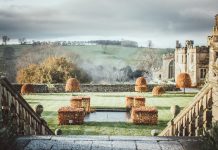
Outside, a series of historic walled terraces descends from the Hall towards the River Wye. The gardens retain their early structural framework while planting has been reworked in more recent years by garden designer Arne Maynard.
Haddon is particularly well suited to visitors interested in:
- medieval and Tudor history
- historic architecture
- English gardens
- period films and television
- photography
- quiet heritage attractions
- Peak District day trips
It is only around two miles south of Bakewell, making it relatively straightforward to combine with time in the town.
Haddon Hall key facts
Address: Haddon Hall, Bakewell, Derbyshire
Postcode: DE45 1LA
2026 main season: Saturday 28 March to Sunday 18 October
Hall and Gardens: 10.30am–4.00pm
Last admission: 3.00pm
Ticket Office: 10.00am–3.00pm
Car park: 10.00am–4.30pm
Restaurant: 10.00am–4.30pm during the main season
Adult admission: £29.50
Children aged 0–15: Free for normal general admission
Parking: £4.40 per car
Recommended visit: At least two hours; around 2½–3 hours is more comfortable if you want to explore both the house and gardens slowly
Nearest useful railway station: Matlock, followed by a bus or taxi to Haddon Hall
Public transport: Regular buses travel along the A6 corridor between Matlock, Haddon Hall and Bakewell
Accessibility: Limited. The historic building contains numerous steps, steep gradients and uneven floors and is not suitable for wheelchairs or wheeled mobility aids inside.
Dogs: Only assistance/support dogs are permitted within the Hall, gardens and grounds.
Booking: Online tickets are available. General-admission advance booking is not described by Haddon Hall as compulsory, although pre-booking is sensible on busy dates and special events can have separate booking rules.
Official website: Haddon Hall’s own website should be checked immediately before travelling.
Prices and times above were checked on 30 August 2026.
What is Haddon Hall?
Haddon Hall is sometimes described casually as a castle, but a more accurate description is a fortified medieval manor house.
The property developed over several centuries rather than being constructed in one period. This is part of its appeal: moving through the building takes visitors from darker medieval spaces into increasingly elaborate Tudor rooms and eventually the considerably lighter Elizabethan Long Gallery.
Haddon remains the private residence of Lord and Lady Edward Manners and has stayed within the same family line throughout its long history.
The house avoided the wholesale Georgian and Victorian alterations made to many English country houses. The family principally lived at Belvoir Castle from the early 18th century, leaving Haddon comparatively untouched until a major programme of restoration began in the 20th century.
That survival is the main reason to visit. Haddon does not feel like a symmetrical Georgian stately home filled primarily with later decorative collections. Its attraction lies in the building itself: stone stairs, courtyards, thick walls, old kitchens, timber, tapestries, chapel paintings and rooms that clearly belong to different phases of the house’s development.
What to expect when you visit Haddon Hall
The visitor journey begins on the opposite side of the A6 from the house.
After parking, visitors cross the main road using the traffic island and continue along the approach towards the Hall. The official accessibility information puts the distance between the car park and Hall at approximately 366 metres. The route includes gravel or limestone surfacing, a bridge over the River Wye and substantial changes in level.
The historic setting becomes increasingly apparent as you approach. Rather than arriving immediately at a large formal façade, you move gradually towards the medieval buildings, stable block and entrance.
Visitors should be prepared for steps. The main house entrance itself is approached by a long flight of around 32 stone steps, while further changes in level continue inside and throughout the terraced gardens.
Once inside, the character changes considerably from room to room. The medieval areas tend to be darker and more enclosed, while the Long Gallery feels noticeably brighter because of its extensive windows.
There is no need to race around. Haddon works particularly well when explored slowly, because many of its most interesting details are architectural rather than large headline exhibits.
Main things to see at Haddon Hall
The Banqueting Hall
The medieval Banqueting Hall is one of the building’s most important spaces.
It retains its historic dais table and contains significant tapestries. Haddon states that the tapestry behind the dais was reputedly presented to the Vernon family by Henry VIII.
Look beyond individual objects and pay attention to the proportions of the room, stonework and relationship between the dais and the rest of the hall. These details help demonstrate how hierarchy and household life worked within a medieval manor.
The Tudor kitchens
The kitchens are among the most atmospheric parts of Haddon.
They retain features including historic ovens, working surfaces and equipment associated with preparing food for a large household. Haddon describes them as some of the country’s oldest surviving medieval kitchens.
Because natural light is limited in this part of the building, the kitchens can be noticeably darker than other areas. Allow your eyes a few moments to adjust when moving between brighter and darker spaces.
The Medieval Chapel
The chapel contains rare medieval wall paintings, including 15th-century fresco seccos.
The paintings are particularly important because religious interiors across England were extensively altered following the Reformation. Haddon therefore gives visitors the chance to see evidence that survived centuries of religious and architectural change.
Visitors with a particular interest in medieval history should allow more time here than a standard walk-through.
The Tudor Parlour
The Parlour provides another change in character and contains Tudor decorative features, including heraldic panelling and a painted ceiling featuring Tudor roses.
It is a useful room for understanding how Haddon developed from a strongly medieval residence towards the greater decoration and comfort associated with Tudor domestic life.
The Long Gallery
The Elizabethan Long Gallery is arguably the most recognisable interior at Haddon Hall.
Designed by Robert Smythson, it stretches approximately 110 feet and is flooded with considerably more natural light than the medieval rooms below.
Its large windows also connect the house visually with the terraces outside.
For visitors interested in architecture, this progression from medieval hall to Elizabethan gallery is one of the most rewarding parts of the visit.
Haddon Hall gardens
Do not treat the gardens as an optional extra.
Haddon’s walled gardens form an important part of the site’s historical significance. Terraces descend across the limestone hillside towards the River Wye, creating changing views back towards the Hall and across the surrounding countryside.
The surviving stone framework is historic, while contemporary planting includes roses, wildflower-style borders, topiary and plants inspired by Elizabethan gardening traditions.
Garden designer Arne Maynard has worked on the Fountain and Bowling Green terraces, taking inspiration from historic planting, tapestries and the architecture of the house.
Anyone primarily interested in gardens should consider visiting from late spring through summer rather than leaving the visit until the very end of the main season.
Haddon Medieval Park
The wider Haddon Medieval Park extends to around 187 hectares and includes ancient pasture, woodland, wetlands and the River Wye.
It should not, however, be confused with a permanently open general visitor park. Access is provided through Haddon Hall’s programme of guided walks, wildlife events and specialist experiences.
Check event dates before travelling if exploring the medieval parkland is an important part of your planned visit.
Haddon Hall and films
Haddon Hall will be familiar to many visitors before they realise where they have seen it.
Its medieval and Tudor architecture has made it a popular filming location, particularly for period drama.
Productions filmed at Haddon include:
- several adaptations of Jane Eyre
- Pride & Prejudice
- The Princess Bride
- The Other Boleyn Girl
- Mary Queen of Scots
- Gunpowder
- The King
Haddon also offers specialist film-related tours at selected times.
For film enthusiasts, spotting locations while moving through the house adds another dimension to the visit without dominating the historic experience.
Who is Haddon Hall best suited to?
Couples
Haddon works particularly well as part of a relaxed Peak District day out.
The historic rooms, gardens and restaurant make it easy to spend several hours here before continuing into Bakewell or elsewhere in the Derbyshire Dales.
Families
Children aged 0–15 receive free general admission in 2026, which can make Haddon considerably better value for families than the headline adult ticket price initially suggests.
Parents should nevertheless consider the physical nature of the site before visiting with very young children.
Pushchairs cannot be taken into the Hall or gardens, and the terraces include steps, low parapets and drops that mean younger children require close supervision.
Young children
Haddon can work with young children if adults are comfortable using a baby carrier and supervising them closely around historic steps and garden terraces.
Do not assume that a buggy can be used for the entire visit.
Teenagers
Teenagers interested in medieval history, architecture, photography or films such as The Princess Bride may get considerably more from Haddon than from a conventional museum.
The lack of rides or major interactive attractions means it may be less suitable for teenagers looking primarily for activity-based entertainment.
Older visitors
The quiet atmosphere, historical interiors and gardens can make Haddon very appealing to older visitors.
Mobility is the main consideration. There are numerous uneven surfaces, gradients and flights of steps, so visitors who struggle with stairs should read the official access statement before booking.
Solo visitors
Haddon is particularly well suited to independent exploration. Its rooms contain enough architectural and historic detail to reward visitors who want to move at their own pace.
School groups
Haddon runs educational programmes covering medieval and Tudor history and offers sessions for different educational stages.
School and organised educational visits should be arranged in advance directly with Haddon’s Learning Team.
Disabled visitors and visitors with limited mobility
This is the visitor group for whom advance planning matters most.
Haddon Hall’s own accessibility statement clearly warns that the historic house is challenging for visitors with restricted mobility.
Wheelchairs and wheeled mobility aids are generally not suitable within the house or gardens because of:
- long flights of steps
- steep gradients
- uneven stone floors
- numerous changes of level
- steps without handrails
- terraced garden construction
Anyone uncertain about access should contact Haddon Hall before purchasing tickets or travelling.
How long should you spend at Haddon Hall?
Haddon Hall officially recommends allowing at least two hours to enjoy the Hall and gardens.
For most first-time visitors, around 2½ to 3 hours is a more relaxed allowance.
A typical visit could include:
- 60–90 minutes exploring the house
- 45–60 minutes in the gardens
- additional time for photography and interpretation
- 30–60 minutes if stopping at the restaurant
Visitors with a strong interest in architecture, gardens or photography could comfortably spend longer.
If you arrive close to the 3pm last-entry time, you will have considerably less opportunity to explore at a leisurely pace, so arriving earlier in the day is preferable.
Haddon Hall tickets and admission prices for 2026
The confirmed general-admission prices for the 2026 season are:
| Ticket | 2026 price |
|---|---|
| Adult aged 16+ | £29.50 |
| Concession aged 60+ | £26.65 |
| Student with valid ID | £24.50 |
| Derbyshire resident with proof of address | £23.60 |
| Green Adult – arriving by public transport or on foot | £26.55 |
| Blue Light with valid ID | £25.07 |
| Child aged 0–15 | Free |
| Historic Houses member | Free during normal admission, subject to conditions |
Car parking costs £4.40 per car and is not included free simply because you hold Historic Houses membership.
Gardeners’ World members can obtain the relevant 2-for-1 offer between 28 March and 30 September 2026 when presenting valid membership documentation.
These prices were checked on 30 August 2026.
Special events, workshops, tours and the Christmas Mercatum market operate under separate ticket arrangements.
Do you need to book Haddon Hall in advance?
Online general-admission tickets can be booked through Haddon Hall.
The attraction does not currently state that ordinary general admission must always be pre-booked, and the ticket office is open during the main season.
However, booking ahead is sensible for weekends, school holidays and dates associated with special events.
If you purchase general admission online and later need to change the date, Haddon Hall’s current terms allow qualifying bookings to be moved subject to availability and an administration fee. Different rules apply to event tickets.
For Mercatum Christmas Artisan Market, advance booking is essential and tickets are not normally available on the day.
Haddon Hall opening times 2026
For the main 2026 season Haddon Hall is open daily from:
Saturday 28 March to Sunday 18 October 2026
Normal times are:
Hall and Gardens: 10.30am–4.00pm
Last entry: 3.00pm
Ticket Office: 10.00am–3.00pm
Car Park: 10.00am–4.30pm
Restaurant: 10.00am–4.30pm
Haddon Hall is closed from 19–21 October 2026, before reopening for special events from 22 October.
The restaurant is scheduled to operate from 22–30 October before closing from 31 October while the site prepares for the Christmas Mercatum markets.
Opening arrangements change seasonally and special events can alter normal access. Always check the official calendar shortly before travelling.
What’s on at Haddon Hall in 2026?
Haddon runs a substantial programme alongside general admission.
At the time of this guide’s fact check on 30 August 2026, the Art of Paper exhibition was running until 20 September and was included with admission.
Forthcoming events included guided parkland walks on 4 September, 25 September and 10 October, together with craft workshops, talks and specialist heritage events during September and October.
The major winter event is the Mercatum Christmas Artisan Market, which is scheduled across six blocks of Wednesday-to-Sunday dates:
- 11–15 November 2026
- 18–22 November 2026
- 25–29 November 2026
- 2–6 December 2026
- 9–13 December 2026
- 16–20 December 2026
Mercatum has separate admission arrangements from the normal visitor season and requires advance booking.
How to get to Haddon Hall
Haddon Hall lies directly beside the A6 between Bakewell and Rowsley, approximately two miles south of Bakewell.
Driving to Haddon Hall
For sat-nav use:
Haddon Hall
Bakewell
Derbyshire
DE45 1LA
Haddon recommends navigating specifically to its car park on the A6 rather than simply entering the estate name, because some navigation systems may attempt to direct drivers onto unsuitable off-road routes.
Brown tourist signs also direct traffic from Bakewell and Rowsley.
Haddon Hall by train
Haddon Hall does not have its own railway station.
Matlock is the most useful nearby rail connection for many visitors travelling by train. From Matlock, continue towards Haddon Hall by bus or taxi.
The road distance between Matlock and the Haddon Hall stop is around 6.4 miles, and the direct bus journey is roughly 18 minutes depending on the service.
Always check live rail and bus timetables before travelling.
Haddon Hall by bus
Public transport is a genuinely practical option here because buses travel along the A6 and stop at Haddon Hall.
Visit Peak District lists services including Transpeak and Trentbarton’s Sixes among buses serving the area.
High Peak’s current Transpeak timetable includes a Haddon Hall Bakewell stop between Rowsley and Bakewell.
Trentbarton’s current Sixes network also connects Matlock and Bakewell.
Visitors arriving by qualifying public transport can use Haddon Hall’s discounted Green Adult general-admission ticket, currently £26.55.
Walking from Bakewell
Haddon Hall is around two miles south of Bakewell.
Although this means walking is possible, the surrounding A6 is a busy road and visitors should plan a proper walking route rather than assume the roadside itself provides an enjoyable continuous pedestrian route.
Those arriving on foot qualify for the Green Adult admission price.
Cycling to Haddon Hall
Cyclists can leave locked bicycles behind the Artisan Gift Shop; ask at the ticket office for the appropriate location.
The wider Bakewell area also has extensive leisure cycling opportunities, including the traffic-free Monsal Trail, although the trail itself does not run directly through Haddon Hall.
Taxi
A taxi from Bakewell is one of the simplest alternatives for visitors staying locally and takes only a few minutes under normal traffic conditions.
A taxi from Matlock is also practical for rail travellers who do not want to coordinate their journey with a bus.
Haddon Hall parking
Haddon Hall has its own visitor car park on the opposite side of the A6 from the Hall.
The 2026 charge is:
£4.40 per car
There are five designated Blue Badge spaces close to the traffic island and driveway entrance.
From the car park, it is approximately 366 metres to the Hall, over a route involving gravel or limestone surfaces, the A6 road crossing and changes in level.
During major special events, the main car park can become very busy and overflow parking may operate in an adjacent field.
Families should take particular care when crossing the A6 with children.
Coach parking is available and is free for qualifying organised groups.
Accessibility at Haddon Hall
Accessibility is the biggest practical limitation visitors need to understand before booking.
Haddon Hall is built on a limestone outcrop and was never designed for modern step-free access.
The official access statement describes:
- steep gradients
- many uneven surfaces
- numerous stone steps
- changes in floor level
- steps without handrails
- approximately 32 steps at the principal entrance
Wheelchairs, mobility scooters and wheeled mobility aids are generally unsuitable inside the Hall and gardens.
Accessible toilets
An accessible toilet is provided in the main toilet block at the Stable Block.
The official accessibility statement notes that access to the toilet area itself involves gravel and small changes in level, so visitors with mobility difficulties should review the full access information before travelling.
Seating
Seating is available in the Great Hall and Long Gallery, with benches also provided on several garden terraces.
Assistance dogs
Assistance dogs are permitted throughout Haddon Hall.
Other dogs are not permitted in the house, gardens or grounds.
Hearing loops and sensory provision
The current published access material does not provide enough clear information to confirm comprehensive hearing-loop or dedicated sensory-room provision.
Visitors requiring these facilities should contact Haddon Hall directly before travelling rather than assume they are available.
Lighting
Some medieval rooms are naturally dark. This is particularly noticeable in the kitchens, where natural lighting is limited.
Visitors whose vision is affected by sudden changes in light levels should allow time for their eyes to adjust.
Food and drink at Haddon Hall
The Haddon Restaurant is housed in the historic Stable Block and can be visited independently of the Hall.
For the main 2026 season it is scheduled to open daily from 10am until 4.30pm through 18 October, before seasonal changes later in October.
The restaurant serves a 2026 menu plus daily specials.
Traditional afternoon tea is also available at:
£21 per person
or
£25.90 with Prosecco
Afternoon tea normally requires booking at least 24 hours ahead.
Families are welcome in the restaurant, and Haddon confirms that children’s menu options and high chairs are available.
Can you take a picnic to Haddon Hall?
Food and drink cannot be consumed inside the Hall or formal gardens.
However, visitors can picnic on the grass in front of the Gardener’s Cottage, where benches are provided.
Toilets and visitor facilities
The principal toilet block is at the Stable Block near the end of the driveway.
Facilities include an accessible toilet.
Additional toilets are available within the lower courtyard, although reaching these involves further steps and uneven surfaces.
Baby-changing facilities are available within the Hall. Published information elsewhere on Haddon Hall’s website also refers to facilities around the Stable Block, so parents should ask staff for the most convenient location on arrival.
Other useful points to know include:
Wi-Fi: There is no visitor Wi-Fi in the Hall, gardens or restaurant.
Mobile reception: Reception can be intermittent because of the thick historic walls.
Large bags: Large bags and rucksacks are not permitted inside.
Pushchairs: Cannot be taken into the Hall or gardens. Storage is available.
Mobility scooters: Cannot be used inside the Hall.
Dogs: Only assistance/support dogs are permitted.
Smoking and vaping: Not allowed anywhere within the Hall, gardens or grounds.
Visiting Haddon Hall with children
One of Haddon’s most family-friendly policies is free general admission for everyone aged 0–15 in 2026.
However, the historic building presents practical challenges.
Pushchairs
Pushchairs and prams cannot be used inside the Hall or formal gardens.
A covered storage area is available, but parents of babies and toddlers should consider bringing their own carrier. Haddon states that it does not provide baby carriers.
Garden safety
The terraced gardens contain steps, changes in level, low parapets and unguarded drops.
Young children therefore require close supervision.
Children’s food
The restaurant welcomes children, offers children’s food and provides high chairs. Larger families are advised to contact the restaurant ahead of busy weekends.
Is Haddon Hall interesting for children?
That depends largely on the child.
Those interested in castles, Tudors, knights, historic kitchens or film locations are likely to find plenty to explore.
Children expecting an adventure playground or highly interactive attraction may find Haddon quieter than places specifically designed around family entertainment.
Best time to visit Haddon Hall
Spring
Spring gives visitors the opportunity to see the gardens developing while generally avoiding the busiest part of the summer holiday season.
Because the Hall reopens in late March, check seasonal garden conditions if flowers are your main reason for visiting.
Summer
Late spring and summer are particularly attractive for the walled gardens.
This is also when weekends and school-holiday periods are likely to attract more visitors, so arriving near opening time can provide a calmer experience.
September and October
Early autumn can be an excellent time for the architecture and gardens, particularly if you prefer cooler weather.
Remember that normal general opening ends on 18 October 2026, followed by special-event arrangements.
Christmas
Christmas is a separate experience rather than an ordinary general-admission visit.
Haddon’s Mercatum Christmas Artisan Market runs on selected dates from November to December and requires advance booking.
Nearby attractions to combine with Haddon Hall
Haddon occupies an excellent position for exploring the Derbyshire Dales, but avoid trying to fit too many large attractions into one day.
Bakewell
Bakewell is only around two miles away and is the easiest place to combine with Haddon.
The compact town centre, River Wye and historic bridge work particularly well for a late-afternoon wander after visiting the Hall.
History enthusiasts could also visit Bakewell Old House Museum, a Tudor building dating from 1534 which operates as a local history museum.
Chatsworth House
Chatsworth House is another of Derbyshire’s major historic houses and lies only a short drive from Haddon.
However, Chatsworth is large enough to occupy most of a day itself. Combining full visits to both properties can feel rushed.
A better strategy is to give each its own day, particularly if you want to see the Chatsworth garden as well as the house.
Thornbridge Hall
Garden enthusiasts could consider Thornbridge Estate near Ashford in the Water.
Advance garden admission can be booked online, although access to individual garden areas can occasionally be restricted by weddings and private events.
Rowsley and Peak Village
Travelling south from Haddon brings you towards Rowsley and Peak Village.
This can provide a convenient shopping or refreshment stop without committing to another major historic attraction.
Local tips for visiting Haddon Hall
Arrive earlier than the last-entry time. Although 3pm is the normal final admission, entering then leaves relatively little time for both house and gardens.
Allow more than the official minimum if you like architecture. Two hours is possible; closer to three hours gives you considerably more time to notice the historic detail.
Wear sensible footwear. Uneven stone, gravel, slopes and garden steps are inherent parts of Haddon.
Check mobility requirements before buying tickets. Haddon is significantly less accessible than many modernised heritage attractions.
Do not bring a large bag. Rucksacks and large bags cannot be taken through the Hall.
Bring your own baby carrier. Pushchairs cannot be used through the main visitor route inside the property.
Use public transport if practical. The Haddon Hall bus stop is conveniently positioned and qualifying visitors receive the Green Adult admission rate.
Give the gardens enough time. The terraces are a major part of Haddon rather than simply landscaping around the house.
Check special-event dates. Workshops and events may have different prices, access arrangements and ticket conditions.
Don’t assume Christmas operates like the summer season. Mercatum has its own timed tickets and pre-booking requirements.
Frequently asked questions about Haddon Hall
Where is Haddon Hall?
Haddon Hall is on the A6 between Bakewell and Rowsley in Derbyshire’s Peak District. It is approximately two miles south of Bakewell. The postcode is DE45 1LA.
How much does it cost to visit Haddon Hall in 2026?
General adult admission costs £29.50 in 2026. Over-60 concessions cost £26.65, students £24.50 and children aged 0–15 enter free. Parking costs £4.40 per car.
What are Haddon Hall’s opening times?
During the main 2026 season, the Hall and gardens are open from 10.30am until 4pm with last admission at 3pm. The main season runs from 28 March to 18 October.
How long do you need at Haddon Hall?
Haddon Hall recommends allowing at least two hours. Around 2½ to 3 hours is more comfortable if you plan to explore both the house and gardens without rushing.
Is Haddon Hall suitable for wheelchair users?
Access is extremely limited. The Hall contains steep gradients, uneven surfaces and numerous steps and is not suitable for wheelchairs or wheeled mobility aids through the main historic visitor areas.
Is Haddon Hall National Trust?
No. Haddon Hall is not a National Trust or English Heritage property. It participates in Historic Houses membership, although exclusions apply to special events.
Can dogs visit Haddon Hall?
Only assistance or support dogs are permitted within Haddon Hall, its gardens and grounds. Ordinary pet dogs are not allowed.
Can children visit Haddon Hall for free?
Yes. Children aged from 0 to 15 receive free general admission during the 2026 season. Special events can have different ticket prices.
Can you get to Haddon Hall without a car?
Yes. Buses run along the A6 and stop at Haddon Hall, including services connecting the Bakewell, Rowsley and Matlock areas. Haddon also offers a discounted Green Adult ticket for visitors arriving by public transport or on foot.
What films were made at Haddon Hall?
Haddon Hall has appeared in several productions including Jane Eyre adaptations, Pride & Prejudice, The Princess Bride, The Other Boleyn Girl, Mary Queen of Scots, Gunpowder and The King.
Can you take a picnic to Haddon Hall?
Picnics are not allowed inside the Hall or formal gardens. Visitors can picnic on the grass in front of the Gardener’s Cottage, where benches are provided.
Is Haddon Hall open at Christmas?
Normal general admission finishes in October, but Haddon reopens for seasonal events. The 2026 Mercatum Christmas Artisan Market runs on selected Wednesday-to-Sunday dates from 11 November to 20 December and requires advance booking.
Final verdict
Haddon Hall is best suited to visitors who want to explore an authentic historic building rather than a heavily modernised visitor attraction.
Its strongest features are the unusually complete medieval and Tudor interiors, the Long Gallery, chapel, kitchens and historic terraced gardens. Its setting beside the River Wye and proximity to Bakewell also make it very easy to build into a wider Peak District stay.
The main limitation is accessibility. Numerous steps, steep gradients and uneven stone surfaces are fundamental to the site, and wheelchair access to the historic house and gardens is extremely restricted.
Families benefit considerably from free admission for children under 16, although pushchair restrictions need to be considered before travelling.
For most first-time visitors, allow around 2½ to 3 hours, arrive well before the 3pm last-entry time and check the official Haddon Hall website immediately before travelling for any changes to opening times, prices, events or access arrangements.